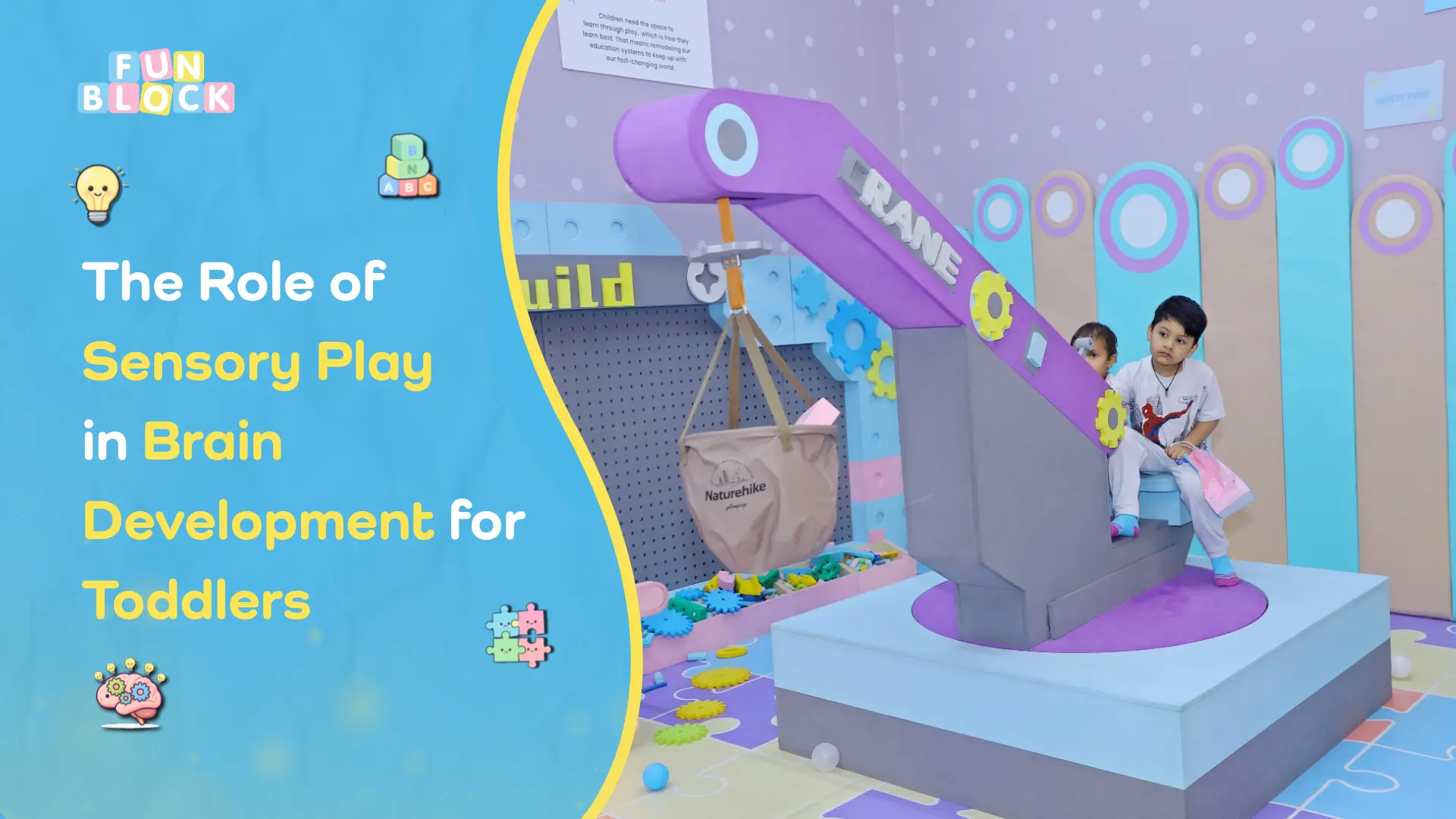

What a child touches, hears, smells, and moves through, is quietly building their brain — one experience at a time.
Introduction
A child’s brain is doing something remarkable during the first few years of life. It is creating neural connections at a rate that will never be seen again. These connections will influence the child’s thinking, movement, communication, and ability to express their emotions for the rest of their life. What drives that process is not instruction. It is experience. Specifically, it is sensory experiences that drive it.
Sensory play for kids is the stimulation in the natural environment that leads to exploration, understanding, and neurological development. Every time a toddler digs their hands into something textured, splashes through water, climbs a surface, or responds to sound and rhythm, they are not just having fun. They are building the neurological architecture that everything else — language, focus, social skill, academic readiness — will eventually rest on.
For parents of children aged 2 to 7, understanding this changes how you look at play entirely. And it changes what you look for in the environments where your child spends their time.
What sensory play actually does to a toddler’s brain
The brain develops through use. A toddler’s brain reacts to every new sensory input they encounter; these connections develop, grow stronger, and eventually become part of how the child perceives and navigates the world. When sensory experiences are rich, varied, and repeated, those connections multiply and deepen.
Sensory play activities engage multiple systems simultaneously. A child exploring a textured surface activates their tactile system, motor system, attention, and curiosity all at once. A child jumping on a trampoline is regulating their vestibular system — the system responsible for balance, spatial orientation, and the ability to sit still and focus — while simultaneously building core strength and coordination.
This is why toddler sensory activities are not supplementary to development. They are development. The brain being built through sensory play is the same brain that will later learn to read, solve problems, manage emotions, and engage socially. The foundation laid now determines how solid everything built on top of it will be.
The five sensory systems toddlers develop through play
Most people think of the five senses — sight, hearing, smell, taste, and touch. But early childhood development involves certain additional sensory systems that are equally critical and far less discussed.
- Tactile system — Processes touch, texture, pressure, and temperature. Foundational for fine motor development, body awareness, and emotional regulation.
- Vestibular system — Processes movement, balance, and spatial orientation. Directly linked to focus, attention, and the ability to remain calm in stimulating environments.
- Proprioceptive system — Processes the body’s position and movement in space. Developed through climbing, jumping, pushing, and pulling. Essential for coordination, body confidence, and self-regulation.
- Auditory system — Processes sound, rhythm, and language input. Music, movement, and spoken interaction all feed this system and directly support language development.
- Visual system — Processes spatial relationships, depth, colour, and pattern. Developed through physical navigation of space rather than passive screen viewing.
A well-designed sensory play environment engages all of these systems — not in isolation, but together, the way the real world does. That integration is what makes purposeful sensory play so developmentally complete.
Why texture, movement, and space matter more than screens
The core limitation of screen-based engagement, even high-quality educational content, is that it is fundamentally narrow. It engages the visual and auditory systems in a passive, two-dimensional way, while leaving the tactile, vestibular, and proprioceptive systems entirely unstimulated.
A toddler who spends significant time with screens is receiving a fraction of the sensory input their brain is asking for. The restlessness, the difficulty focusing, the resistance to sitting quietly — these are often not behavioural problems. They are sensory deficits. A brain that has not had enough physical, tactile, and movement-based input will seek it out through behaviour.
Sensory play activities that involve real materials, real movement, and real physical space address all of this directly. The child who has dug through an organic seed pit, jumped on a trampoline, climbed an obstacle course, and splashed through a water play zone has given their brain the full-spectrum input it is genuinely asking for. They return home calmer, more focused, and more emotionally regulated — not despite having played hard, but because of it.
How Funblock’s zones deliver sensory development
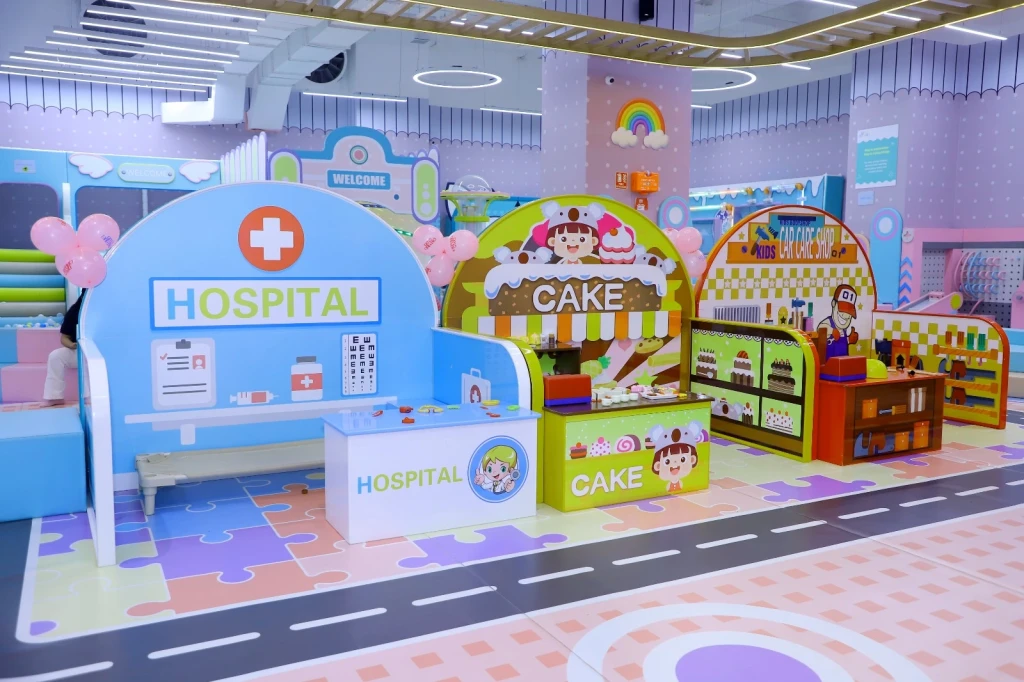
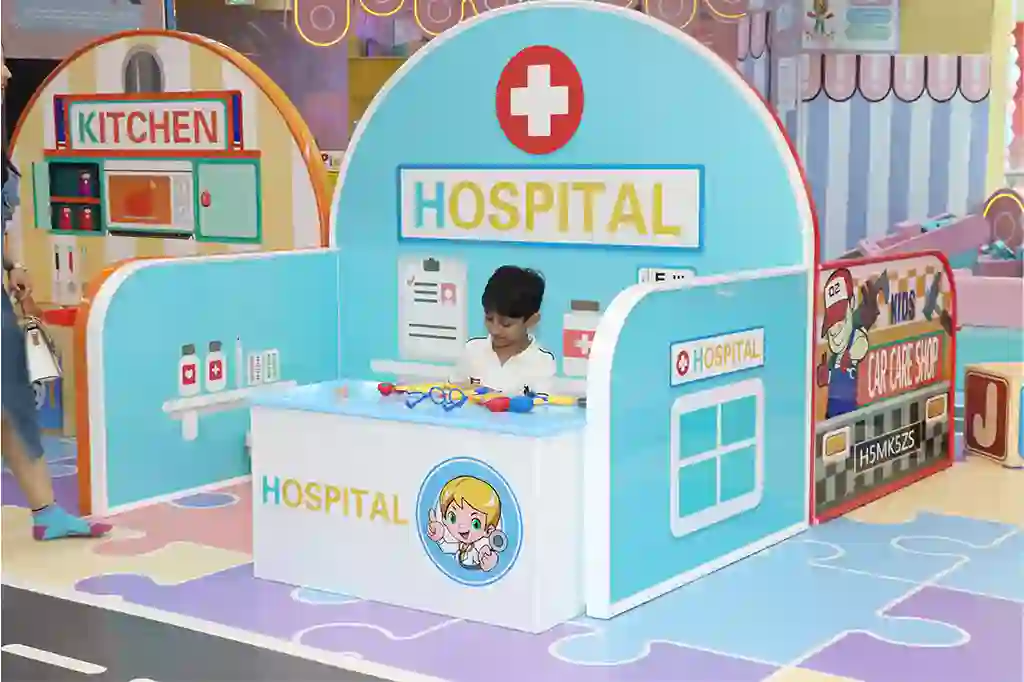
Funblock is a STEM-certified indoor play area for children aged 2–7, designed around a thorough understanding of early childhood development. Several of its zones function as sensory play environments — each engaging different sensory systems, each purposefully designed to develop specific capabilities.
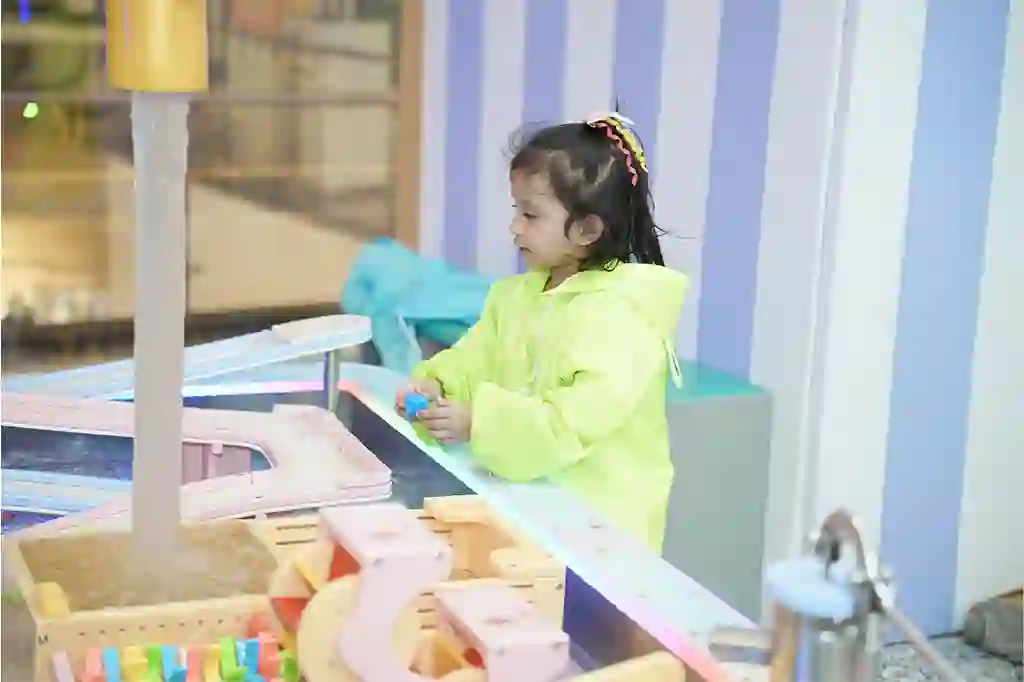
Organic Seed Pit
The Organic Seed Pit is Funblock’s most overtly sensory zone. Children dig, pour, and explore natural organic materials. The textures that are entirely different from anything a domestic environment typically offers. This kind of unstructured tactile exploration builds fine motor skills, hand-eye coordination, and the kind of open-ended curiosity that underpins scientific thinking. Natural materials engage the tactile system more completely than synthetic alternatives, producing richer sensory input and deeper neural engagement.
Ball Pool Area
The ball pool is a full-body sensory experience. Children navigate through varying pressure and resistance, developing spatial awareness, body coordination, and physical confidence. The tactile input from surfaces pressing against the body simultaneously activates the proprioceptive system, building the child’s sense of where their body is in space. This is one of the most effective environments for developing the physical self-awareness that supports later gross motor and fine motor control.
Trampoline Zone
The trampoline directly targets the vestibular system which is most responsible for balance, spatial orientation, and the ability to focus. Children who spend time on a trampoline are not simply burning energy. They are controlling a sensory system that, in its underdeveloped state, results in the restlessness and attention issues that many parents identify with energetic toddlers. Regular vestibular input through bouncing and movement produces measurable improvements in focus and emotional regulation.
Obstacle Course
The obstacle course engages proprioception in its most complete form. Climbing, crawling, balancing, and jumping through a structured physical challenge asks the body to constantly assess its own position and adjust. Every successful navigation of the course builds body confidence, coordination, and the neurological pathways that connect physical awareness to focused, purposeful action.
Music and Movement Zone
Sound and rhythm engage the auditory system in ways directly connected to language development. Children who move to music, who feel rhythm in their bodies are building the same neural foundations that support reading, speech, and communication. The Music and Movement Zone at Funblock integrates physical movement with auditory engagement, creating a multisensory experience that benefits language, coordination, and emotional expression simultaneously.
Soft Play Zone
The soft play zone at Funblock provides a low-risk environment where toddlers who are still building physical confidence can explore movement, climbing, and spatial navigation without fear of injury. Soft, cushioned surfaces allow children to attempt physical challenges they might hesitate to try elsewhere, building the proprioceptive and vestibular input essential to early development in a setting that parents can feel completely relaxed about.
What sensory-rich environments produce over time
The benefits of consistent, quality sensory play for kids are not limited to the day of the visit. They accumulate.
| Sensory system engaged | Immediate benefit | Long-term developmental outcome |
|---|---|---|
| Tactile | Fine motor skill, texture awareness | Handwriting, self-care, emotional regulation |
| Vestibular | Balance, spatial orientation | Focus, attention, ability to sit still |
| Proprioceptive | Body confidence, coordination | Gross motor control, physical resilience |
| Auditory | Rhythm, sound discrimination | Language development, reading readiness |
| Visual-spatial | Depth perception, navigation | Mathematical thinking, problem-solving |
Children who receive rich, varied sensory input in their early years consistently demonstrate stronger academic readiness, better emotional regulation, more developed social skills, and greater physical confidence by the time they enter formal schooling. The investment made in toddler sensory activities during ages 2 to 7 pays forward into every area of later development.
A safe environment designed for sensory exploration
Sensory play requires a particular kind of environment — one where materials are safe, surfaces are forgiving, and children have the freedom to explore without constant parental intervention. Funblock is designed precisely to that standard.
Every surface is cushioned and cleaned throughout the day. Every zone is built from materials selected for both developmental purpose and child safety. Trained staff are present across the space, actively engaged with children, so parents can allow genuine independent exploration without anxiety.
For parents who want to understand how the full range of Funblock’s structured activities supports child development, our guide on indoor activities at Funblock covers each zone and its developmental purpose in detail.
Conclusion
Sensory play for kids is not an optional extra in early childhood. It is the primary vehicle through which the developing brain builds its most essential capabilities — physical coordination, emotional regulation, social readiness, language development, and the capacity for focused, purposeful attention.
The environments where toddlers spend their time matter enormously. A space that provides rich, varied, purposeful sensory input is doing something real for a child’s development, is responsible for supporting a child’s development.
Funblock was built to provide exactly the right environment — across multiple zones, across multiple sensory systems, and within a space that is safe, clean, and genuinely excellent. If you are in Delhi, Noida, or Hyderabad, Funblock is where your toddler’s brain wants to be this weekend.
Walk in any day of the week, or book your child’s birthday party online today.
FAQ
- What is sensory play and why is it important for toddlers?
Sensory play refers to any activity that engages a child’s senses — touch, sound, movement, balance, and spatial awareness. It is important for toddlers because it directly drives the formation of neural connections in the developing brain, building the foundations for physical coordination, emotional regulation, language development, and academic readiness. - What are the best sensory play activities for toddlers aged 2 to 4?
The most effective sensory play activities for toddlers aged 2 to 4 involve real materials and real movement, digging through natural textures, climbing and balancing on varied surfaces, bouncing and jumping, water play, and music with movement. All of these engage multiple sensory systems simultaneously and produce strong developmental benefits. Funblock’s zones are specifically designed to deliver all of these within a single visit. - How does a soft play zone support sensory development?
A soft play zone provides a low-risk physical environment where toddlers can explore climbing, crawling, and movement without the fear of injury that harder surfaces produce. This freedom to attempt physical challenges builds vestibular and proprioceptive development — the sensory systems most responsible for balance, coordination, and the ability to focus and sit still. - How often should toddlers engage in sensory play activities?
Developmental research consistently suggests that rich sensory input should be a regular part of a toddler’s weekly experience, not an occasional outing. Children who engage in varied toddler sensory activities multiple times per week demonstrate significantly stronger developmental outcomes than those whose sensory input is primarily screen-based. - Can sensory play help with focus and attention in toddlers?
Yes, directly. The vestibular system, which governs balance and spatial orientation, is also closely linked to the ability to focus and remain calm. Bouncing, climbing, and movement-based play regulate this system to produce measurable improvements in attention and emotional regulation. Many parents notice that children who have had active sensory play sessions are calmer and more focused afterwards. - Is Funblock suitable for toddlers who are sensitive to sensory input?
Yes. Funblock’s zone-based design includes both high-stimulation areas and calmer sensory spaces. Children who are more sensitive to input can engage with quieter zones like the Reading Corner or Organic Seed Pit while gradually building tolerance for more stimulating environments. Staff are trained to support children across the full range of sensory preferences. - What makes Funblock’s sensory play zones different from a standard indoor playground?
Standard indoor playgrounds typically provide physical equipment without developmental intention. Funblock’s zones are each designed around a specific sensory system and developmental purpose — from the vestibular input of the Trampoline Zone to the tactile exploration of the Organic Seed Pit and the proprioceptive engagement of the Obstacle Course. The result is a sensory environment that is complete and purposeful rather than incidental. - At what age does sensory play have the greatest impact on brain development?
The period between ages 2 and 7 is widely considered the most significant window for sensory-driven brain development. Neural connections formed during this period are foundational. They support everything that follows in language, movement, emotion, and cognition. Starting sensory-rich play early and maintaining it consistently through this window produces the strongest long-term developmental outcomes.