
Introduction
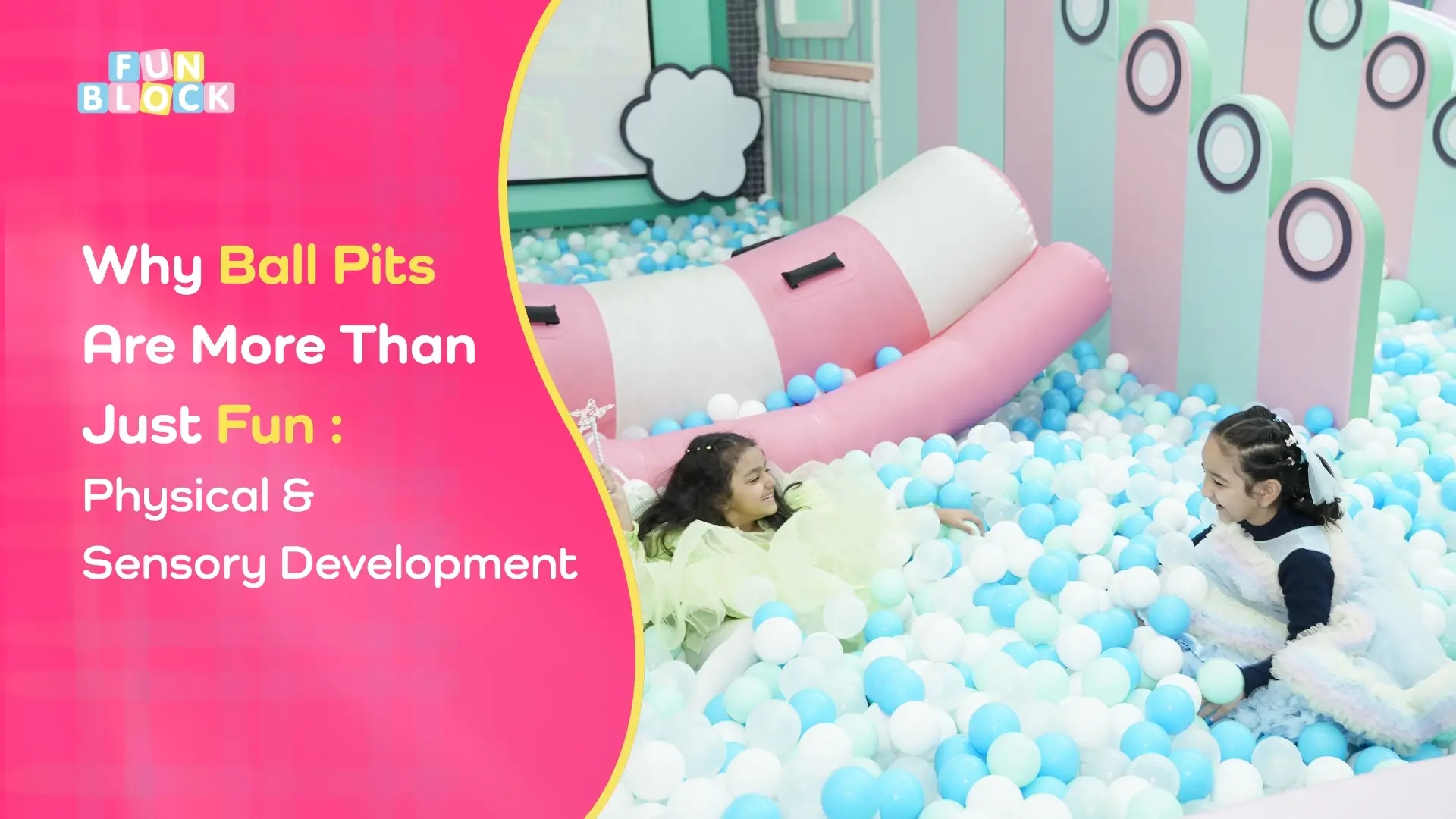
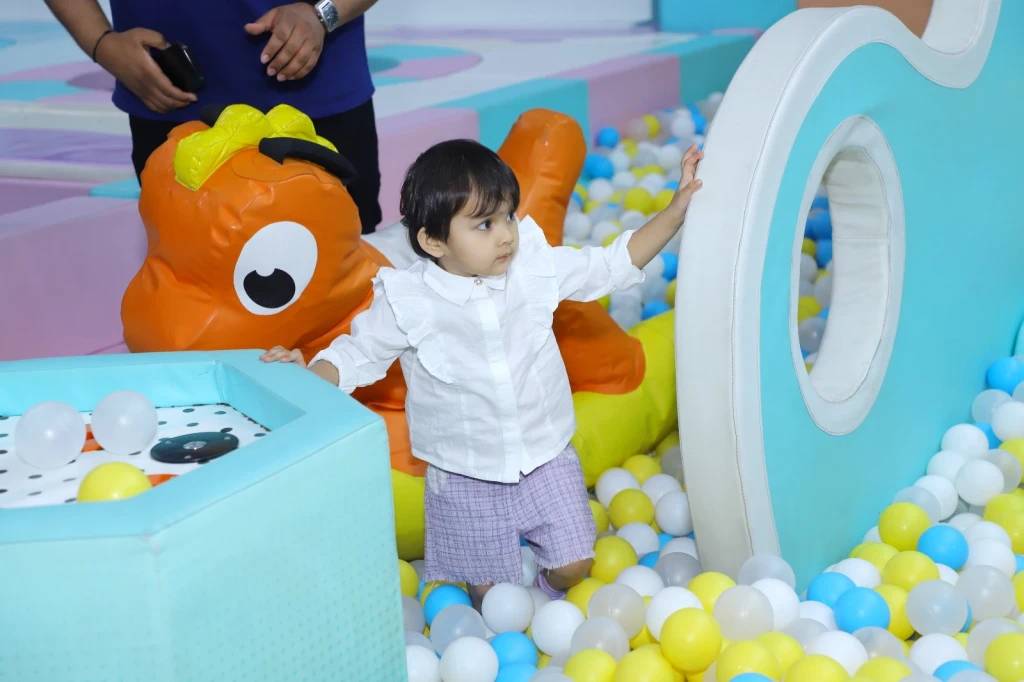
The moment children see a ball pit, they can’t wait to get in and play. They dive in, climb in, wade through it, and play in it. Even what appears to be simple play is actually a full-body activity that keeps kids moving, adapting, and reacting to their environment.
A children’s ball pit is often one of the most popular attractions in an indoor play area, offering benefits that go far beyond entertainment. Children experience various sensory inputs as they develop critical motor skills while navigating the ball pool. These experiences help lay the groundwork for regular movement, active play, and early learning in kids.
How Ball Pits Encourage Total Body Movement
A ball pit encourages children to stay active through a variety of natural movements during play. As they explore, climb, crawl, and move through the shifting balls, their bodies continuously adapt to changing positions. This combination of movement helps engage multiple muscle groups while supporting balance, coordination, and overall physical development.
Inside a children’s ball pool, children often:
- Walk across an unstable surface
- Crawl through varying depths
- Reach and stretch in multiple directions
- Bend, squat, and repeat the positions frequently
In addition to promoting coordination and general physical development, these activities help strengthen major muscle groups. Active play promotes healthy growth and development, according to the World Health Organization (WHO), which emphasizes the value of consistent physical activity during early childhood.
The Role of Ball Pits in Sensory Development
For young children, sensory experiences play an important role in understanding the world around them. A sensory ball pit provides a unique environment where touch, movement, and body positioning work together.
The colourful balls provide continuous sensory feedback as children move through the pit. This enables children to see how their bodies move through space and how different motions elicit different reactions.
The following are a few significant sensory experiences that kids gain:
- Feeling varying levels of pressure against the body
- Understanding movement through space
- Developing awareness of body position
- Responding to changing surfaces and textures
The American Academy of Pediatrics (AAP) emphasizes that active play helps children learn through direct interaction with their environment, supporting healthy development during the early years.
Building Balance, Coordination, and Body Awareness
Repetitive movement experiences can help children develop a variety of skills. A children’s ball pit tests their coordination while they learn to adjust in a constantly changing environment.
When navigating a ball pit, kids have to make constant adjustments to keep their balance. Despite their seeming insignificance, these changes help develop vital life skills.
Children develop:
- Dynamic balance
- Hand-eye coordination
- Spatial awareness
- Controlled body movements
These skills support a wide range of activities both within and outside the play environment. Whether they participate in any kinds of sports later in life, these strong foundational movement skills provide long-term advantages.
Why Ball Pits Work Best as Part of Active Play
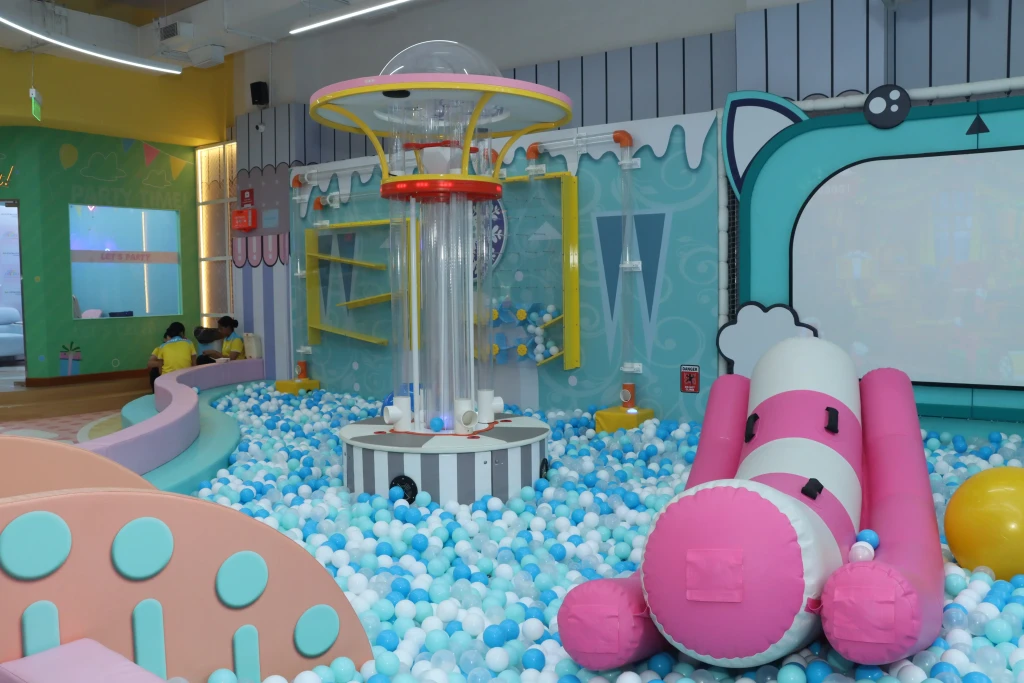
A ball pit works even better when combined with other physical play activities. In many indoor play areas, children naturally move between slides, obstacles, and ball pits. For example, after practicing their movement skills in an indoor ball pit playground, kids can continue to test them on nearby play structures. This variety keeps children engaged while exposing them to a variety of physical experiences.
Parents interested in physical and cognitive development can also explore our blog on how indoor slides support children’s growth through active play.
Supporting Problem-Solving Through Play
Ball pits encourage children to think and make decisions while they play, even though they are often associated with physical activity. Naturally, kids search for hidden objects, find routes through the balls, and figure out how to move around the area effectively.
A high-quality children’s ball pit inspires kids to:
- Adapt to changing surroundings
- Make simple decisions during play
- Complete simple play challenges
- Recognize cause and effect
These encounters enhance other learning-oriented activities intended for young children. Parents interested in this area can also read “How STEM Activities Help Children Aged 2–7 Develop Problem-Solving and Critical Thinking Skills,” which explores additional ways children build thinking skills through play.
The Importance of Indoor Ball Pit Play for Children Ages 2 to 7
The years between ages 2 and 7 are an important period for physical and sensory development. Children can repeat motions, explore on their own, and develop skills in their own way in a fun, safe environment at an indoor ball-pit playground. They continue to practice critical developmental skills without feeling directed or under pressure because the environment promotes active participation.
Children who have regular opportunities for movement-based play are better able to develop the fundamental skills necessary for daily tasks, school readiness, and future physical confidence.
Conclusion
A ball pit is much more than just a place to play and jump. From enhancing balance and coordination to fostering sensory processing and body awareness, these experiences support important facets of early childhood development. While allowing kids to move, explore, and interact with their environment in ways that promote healthy development, a sensory ball pit keeps play enjoyable.
Funblock’s STEM-certified indoor play zone offers engaging play experiences that encourage movement, exploration, and age-appropriate development for kids ages 2 to 7. Every space is made to encourage children’s learning through play, from interactive play areas and climbing activities to ball pit experiences.
Plan a visit today and give your child more opportunities to move, explore, and grow through play.
FAQs
- What advantages does a ball pit offer children?
A ball pit for kids supports physical strength, active movement, sensory engagement, and motor skill development through hands-on play. - How can a sensory ball pit aid in a child’s growth?
Children can better understand and react to sensory information by being exposed to a variety of touch sensations, movement patterns, and body positions through a sensory ball pit. - What age is suitable for a children’s ball pit?
A children’s ball pit is particularly beneficial for children aged 2–7, as this stage is important for developing physical, sensory, and motor skills. - Why is an indoor ball pit playground good for young children?
An indoor ball pit playground encourages active play, balance, coordination, and social interaction in a safe indoor environment. - How does a children’s ball pool differ from other play equipment?
A children’s ball pool combines movement-based play with sensory experiences, giving children opportunities to develop multiple skills while enjoying free play.